DEP – Cohort 2
DEP 2 Reflection Zine
The DEP 2 Reflection Zine looks back on the second cohort of the DAO Experimentation Program: the overview of the cohort, then the stories of Cultural & Creative DAO, KAT Tokenomics DAO and Pesa Play DAO. Each part can also be downloaded as a PDF.

Download as PDF, one file per part:
Overview (23.2 MB) Cultural & Creative DAO (13.2 MB) KAT Tokenomics DAO (7.3 MB) Pesa Play DAO (8.1 MB)
Overview
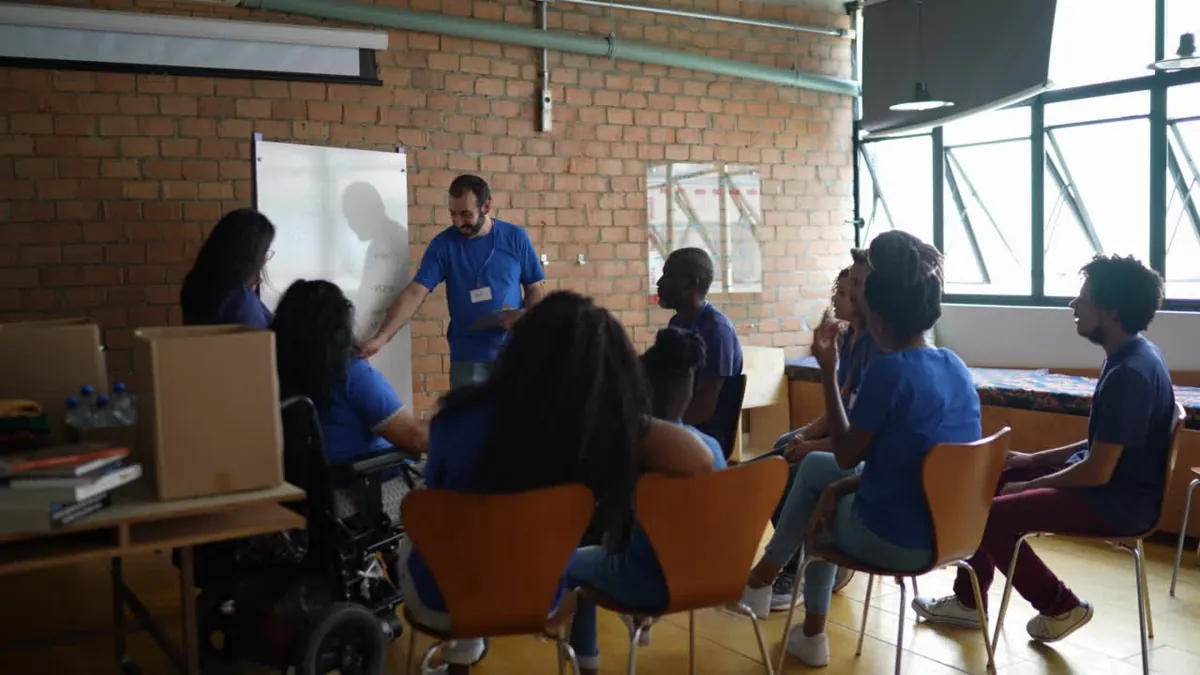
What does it take to create community-driven impact that lasts?
Introduction
Building on DEP 1, Kambria's DAO Experimentation Program Cohort 2 (DEP 2) explored how decentralized communities could create meaningful social impact while developing regenerative models to sustain their initiatives.
Across three DAOs — Cultural & Creative DAO, KAT Tokenomics DAO, and PesaPlay DAO — participants explored new ways of collaborating, making collective decisions, managing resources, and creating shared value. With social impact and regeneration as equally important goals, DEP 2 became an opportunity to test not only what communities could achieve together, but also what it would take to keep their efforts going.
Yet experimentation is rarely a straightforward journey. Behind every proposal, decision, and milestone are challenges to navigate, assumptions to question, and lessons that cannot always be captured by numbers alone. This reflection zine looks beyond the outcomes to capture the journey behind DEP 2 — the experiences, challenges, achievements, and lessons that shaped the cohort.
Message from the Core team
DEP 2 has been a journey of experimentation, collaboration, and learning. Together, we explored what it takes to build community-driven initiatives that create meaningful impact while working toward long-term sustainability.
Along the way, we witnessed inspiring efforts, unexpected challenges, and valuable lessons. Not everything went as planned, but each experience offered an opportunity to reflect, adapt, and grow.
We are grateful to every DAO member, partner, and contributor who brought their time, ideas, and commitment to this journey. Your contributions have helped shape our understanding of what decentralized collaboration can achieve and where it can improve.
As we look ahead, we hope the reflections in this zine will inspire new ideas, stronger communities, and more sustainable approaches to collective impact. Thank you for being part of this experiment and helping shape what comes next.
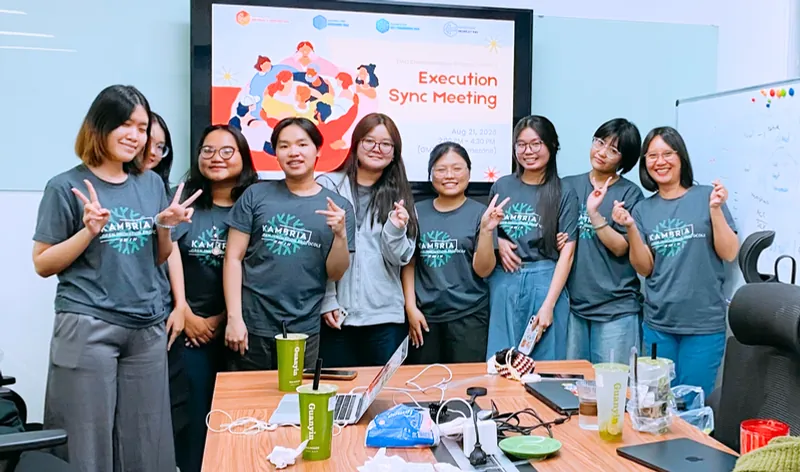
DEP 2 at a glance

37 Children reached
Through Pesa Play DAO's Hela Kids financial literacy pilot in Nairobi, Kenya.
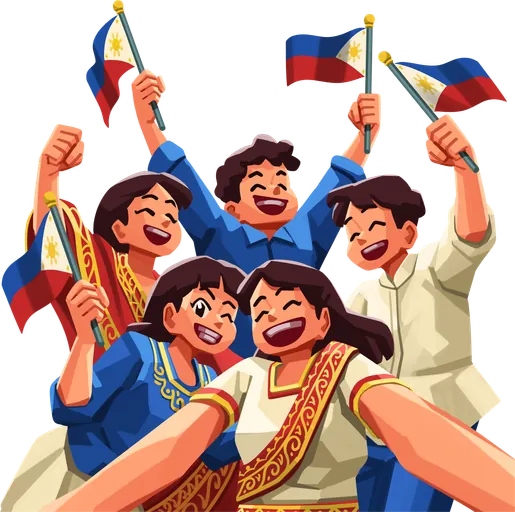
3 Cultural nodes engaged
Across Luzon, Visayas, and Mindanao in the Philippines through Cultural & Creative DAO.
3 Pilot DAOs supported
With contribution recognition framework materials developed by KAT Tokenomics DAO.
Explore DEP 2 DAOs
Cultural & Creative DAO (CCD)
Outreach and earned coverage
KAT Tokenomics DAO (KTD)
From Framework to Function
PesaPlay DAO (PPD)
Making Financial Literacy Accessible

DEP 2 Ambassadors

DEP 2 Ambassadors are passionate changemakers, community builders, and advocates who help connect the DAO Experimentation Program with wider communities. Through outreach, storytelling, and meaningful connections, ambassadors helped bring decentralized collaboration closer to diverse audiences and create opportunities for broader participation.
DEP 2 welcomed two types of ambassadors: Internal Ambassadors, DAO members who took on additional responsibilities to promote activities, engage participants, and strengthen community connections; and External Ambassadors, community collaborators who supported outreach, shared DAO activities, and connected initiatives with potential partners and audiences. Together, they contributed to DEP 2's vision of building a collaborative, inclusive, and regenerative ecosystem where community-driven initiatives can grow beyond their immediate networks.

Mfon Bassey
DEP 2 Ambassador & CCD Member
“I want to Continue helping Kambria achieve its unique goals and learn from it”

João Emerson Lobo
DEP 2 Ambassador & PPD Member
“Becoming an Ambassador allows me to share authentic stories from my experience with Kambria, support the growth of the Kambria community, and strengthen my community-building skills”

Taofeek Khadijah Olayemi
DEP 2 Ambassador
“I want to become a Kambria Ambassador because I am passionate about technology, innovation, and creating opportunities for young people to learn, connect, and grow”
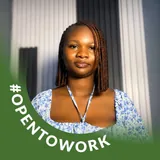
Patience Iseh
DEP 2 Ambassador
“I’d love to use my content and storytelling skills to make what Kambria is building easier to understand, bring more people into the community, and grow alongside the ecosystem.”
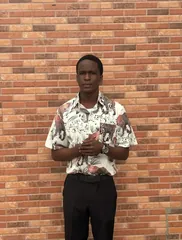
David Iorwen
DEP 2 Ambassador
“I want to become a Kambria Ambassador to aid in onboarding more people to a community where they can get more value and enrich their worth”
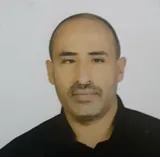
Alselwi/Yaser Sultan Abdulghani
DEP 2 Ambassador
“Serving as a Spotlight Ambassador would allow me to bridge gaps between grassroots community leaders and broader, global ecosystems”
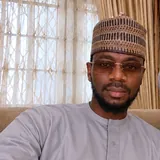
Jawad Abubakar
DEP 2 Ambassador
“I see this as an opportunity to learn, contribute and grow together with the Kambria ecosystem.”

Alberto Edmerson Lobo
DEP 2 Ambassador
“The Capacity Exchange DAO (CED) is a platform that can open doors for people in my community to learn new skills and connect with global experts. I want to be the bridge between my network and this opportunity.”

Chioma Chukwurah
DEP 2 Ambassador
“I’m also excited to learn, contribute, and grow alongside the Kambria community while helping more users understand and discover the project.”
Cultural & Creative DAO
 Play the video: Cultural & Creative DAO: the DEP 2 summary
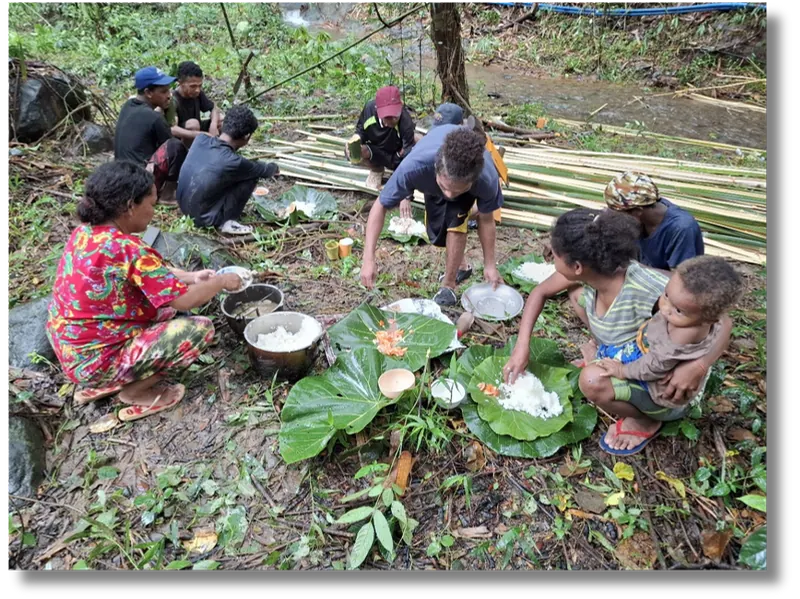
Preserving Cultural Heritage Through Community-Driven Collaboration
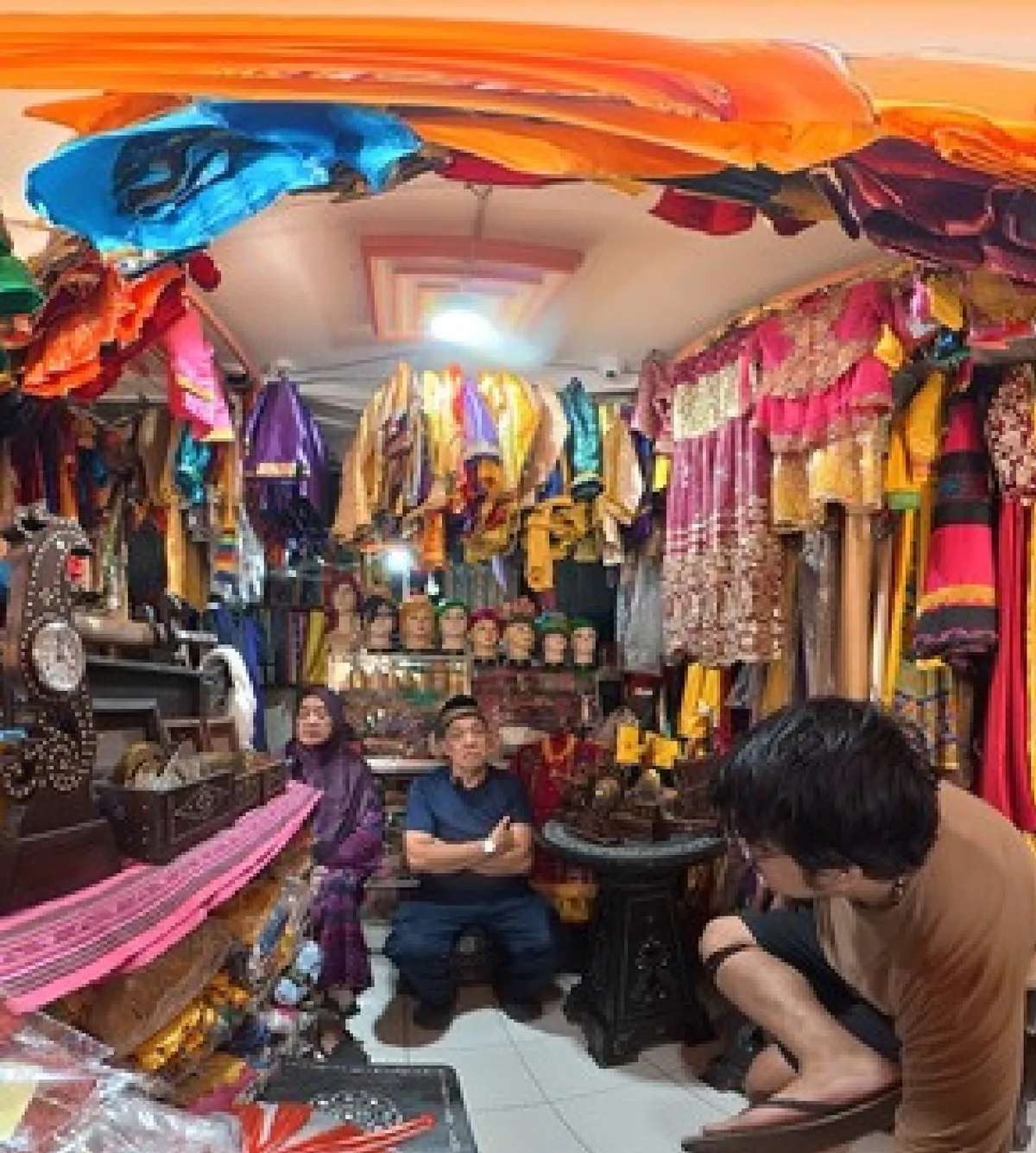
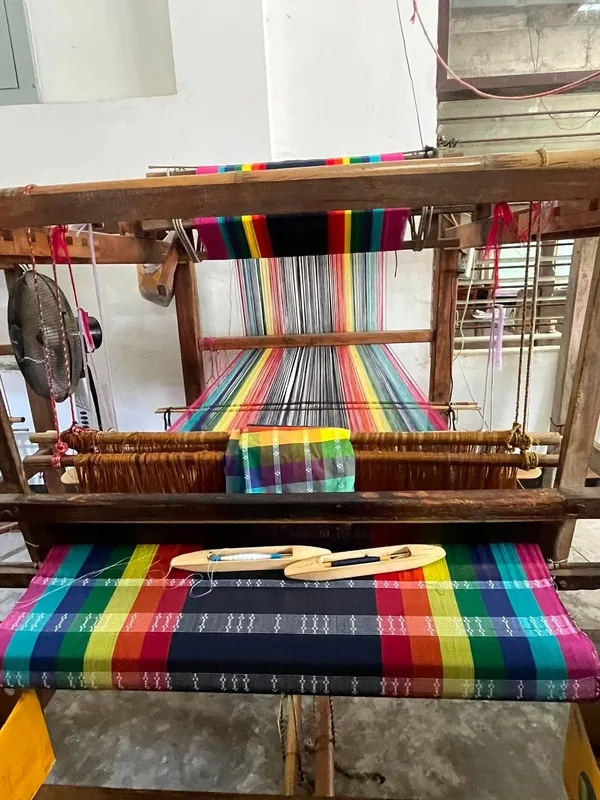
Cultural & Creative DAO (CCD) brought together communities across Luzon, Visayas, and Mindanao in the Philippines through “Roots in Minds: Cultural Expressions for Regenerative Futures.” The initiative focused on preserving Indigenous knowledge, traditional craftsmanship, creative expressions, and community stories through a digital Museum of Culture. By combining cultural documentation, creative storytelling, and decentralized collaboration, CCD explored how technology and community participation could help safeguard cultural heritage while creating opportunities for long-term cultural sustainability.
Impact and Key Achievements
CCD Virtual Museum
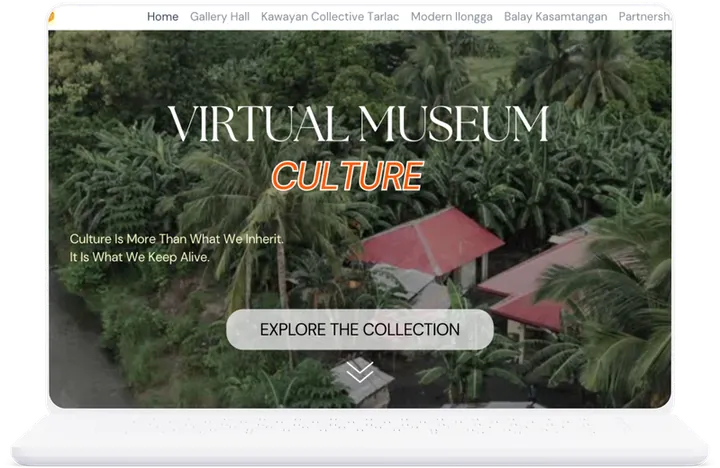
The Virtual Museum became CCD's central digital output, providing a shared space to present cultural materials from participating communities. It represents an important step toward organizing cultural documentation into a format that can support public engagement and future creative work.
The Museum also provides a foundation for continued development, including improved curation, clearer attribution, additional cultural stories, and future collaboration with media and community partners.
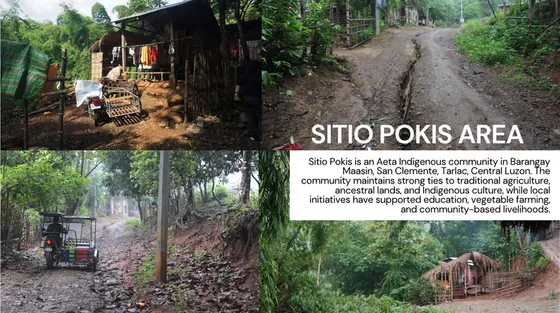
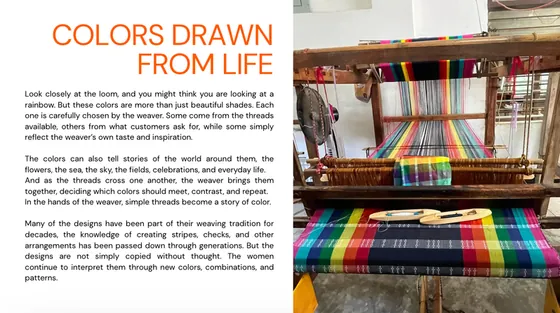
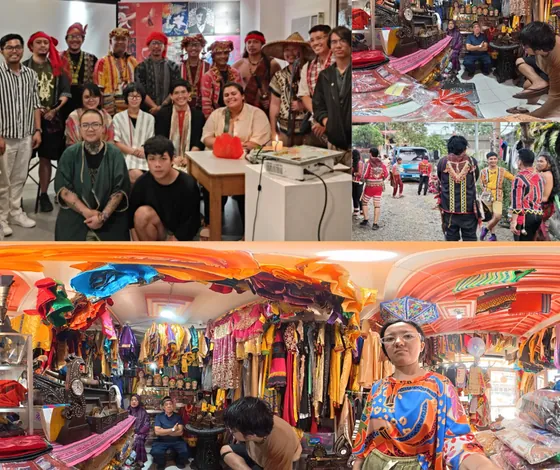
Collaboration with 3 Cultural Nodes
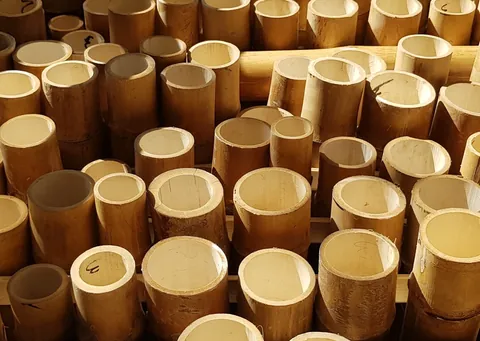
Kawayan Collective
Luzon
Instagram: kawayancollectivetarlac
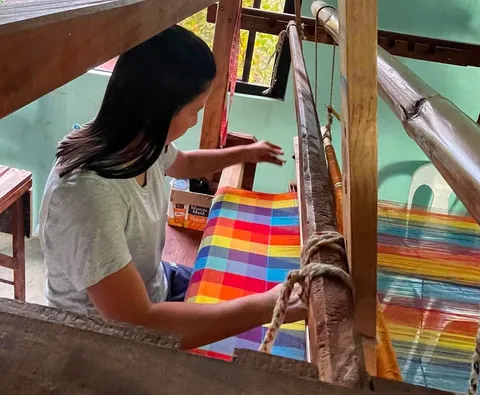
Modern Ilongga
Visayas
Instagram: modernilongga
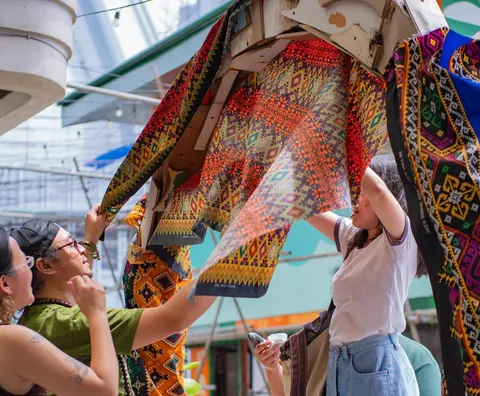
Balay Kasamtangan
Mindanao
Website: balaykasamtangan.com
Media Partners
I Love Philippines!!! (Green Mango)
Tarlac Tourism

Philippine Wildlife Rangers & Environmental Enforcers
Container Living PH
What Worked Well?
- A shared digital destination: The Virtual Museum provided a concrete output around which the team could organize cultural materials and creative work.
- Community-centered documentation: The three-Node model connected local cultural knowledge with DAO contributors working on documentation, creative production, and archiving.
- Clearer ownership as a direction: The transition to three Owned Lanes established a more explicit structure for assigning responsibility and defining deliverables.
- Potential for continued collaboration: Media outreach and partnership discussions created opportunities to extend the visibility of CCD's work beyond the immediate DAO community.
What Did We Learn?
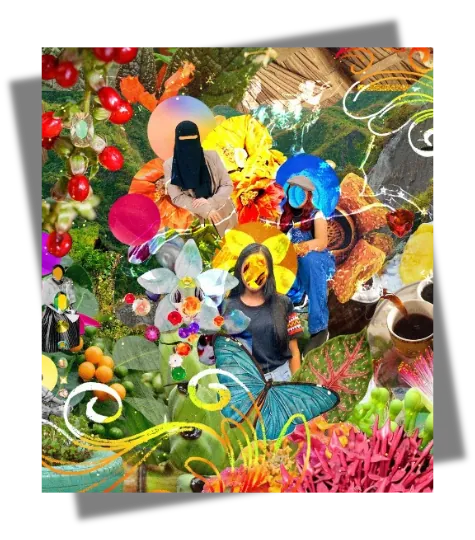
- DEP 2 highlighted that cultural preservation requires more than collecting photographs and stories. Materials need sufficient context, appropriate consent, clear attribution, and a reliable process for review and long-term access.
- Each contributor needs to understand the expected output, the deadline, the quality requirements, and how their work connects to the next stage.
- Finally, the experience reinforced the importance of aligning execution with the original project objectives. When a strategy changes, the team needs to document the rationale, revise the expected outcomes transparently, and explain how the revised work contributes to the project's overall goals.
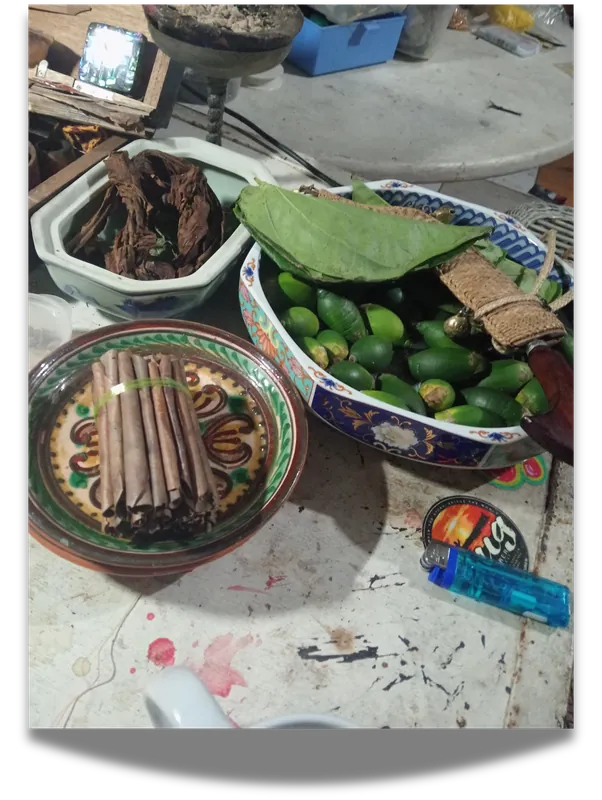
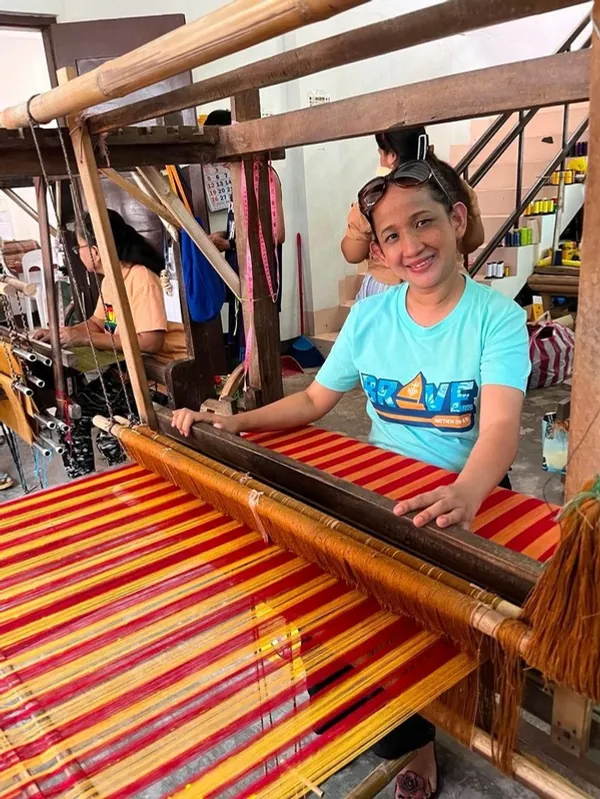
What Was Challenging?
- Node coordination and material collection: Delays in preparing and submitting materials affected execution timelines.
- Inconsistent source-material quality: Some materials required additional context, review, or improvement before they could be used confidently in final outputs.
- Cross-Lane dependencies: Creative production and archiving depended on timely, complete documentation and clear requirements.
- Transition to the Owned Lanes model: The team needed time to clarify ownership, define tasks, and establish a consistent workflow.
What Should Improve?
- Define specific deliverables, owners, and deadlines at the beginning of each execution cycle.
- Provide standardized documentation requirements and examples to all Nodes.
- Require clear context, attribution, and permission records alongside photographs and interviews.
- Maintain a centralized archive and Master Sheet with verifiable evidence for every reported output.
- Set realistic financial targets and establish a clear process for documenting expenses and regeneration.
KAT Tokenomics DAO

Building Transparent Contribution & Recognition Systems
Our Journey
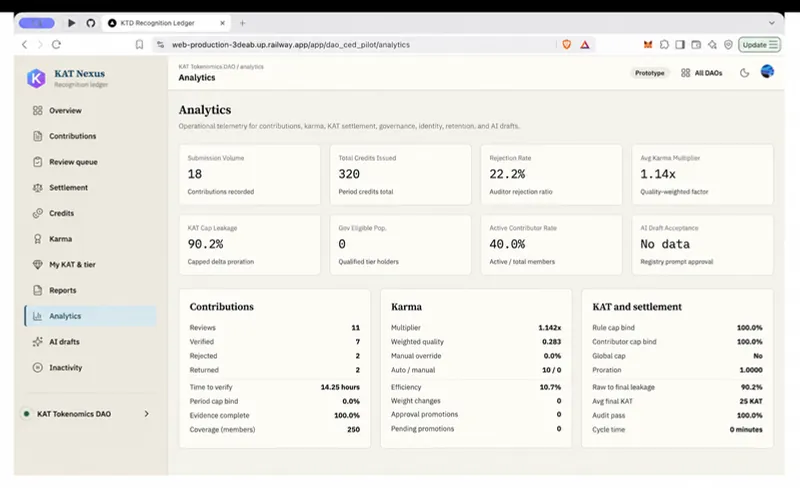
The KAT Tokenomics DAO (KTD) participated in DEP 2 to turn Kambria's KAT Reward & Privilege Framework 1.0 into practical tools, operating processes, and technical infrastructure for recognizing contributions across decentralized communities.
At the heart of KTD's work was a fundamental question: How can DAOs recognize contributions fairly, consistently, and transparently while maintaining a verifiable record of the value created by their members?
To address this, KTD worked across three interconnected areas: framework application and auditing, system prototyping, and documentation and learning.
The DAO developed operating toolkits, pilot configuration materials, audit procedures, and a technical prototype to support the contribution recognition process.
Core Framework
- Verified Contribution
- Credits
- Karma
- Tiers & Privileges
Our Working Structure
Lane 1: Framework Support & Audit (FSA)
Andrew Anyona Mogambi & Clemence Ruhi & Abdo Abdirahman Shibani
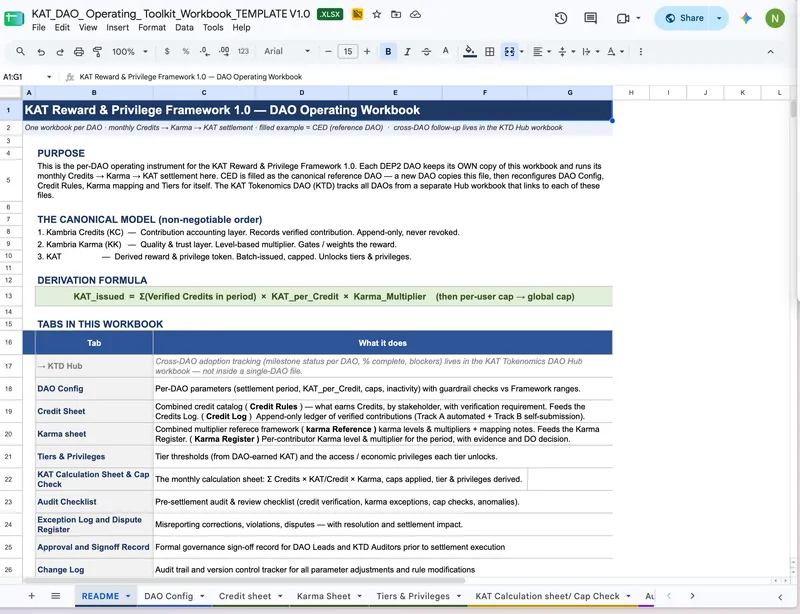
Translating Framework 1.0 into practical DAO configuration, onboarding, validation, and audit processes.
The FSA team developed the operating materials needed to help participating DAOs apply the recognition framework.
Its work included pilot contact tracking, DAO briefing materials, configuration workbooks, guardrail reviews, and worked calculation samples.
Key contributions
- Delivered the Canonical Toolkit and Operating Guide.
- Prepared DAO Quick-Start and Briefing materials.
- Drafted configuration packages for participating pilot DAOs.
- Developed guardrail and audit matrices and pilot review records.
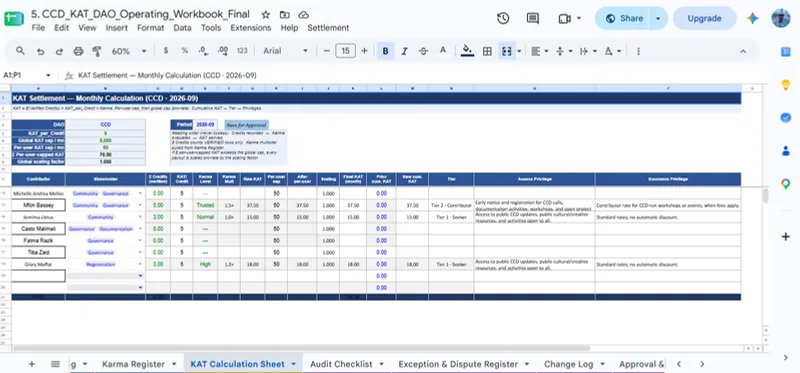
- Prepared provisional worked samples for the Credit → Karma → KAT cycle.
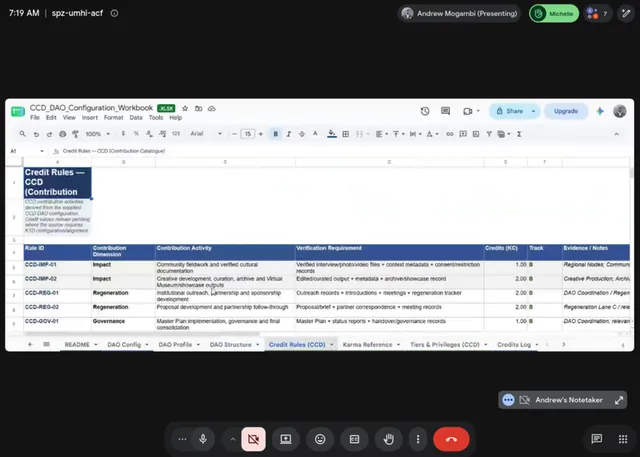
One of FSA's most important lessons was that standardized tools reduce the effort required for DAOs to engage with a complex framework. Pre-filled configuration materials proved more practical than expecting participating DAOs to build their own rules from empty templates.
However, progress remained dependent on timely responses from pilot DAOs. As of the October 15 summary report, CCD's configuration had been drafted and reviewed, while ED and PPD still required further alignment. Worked pilot samples also contained provisional values.
Future implementation should establish clear response deadlines, verification responsibilities, and escalation procedures to prevent external dependencies from delaying framework validation.
Lane 2: System Prototyping (SP)
Clemence Ruhi & Abdo Abdirahman Shibani & Garvit Dhakate & Bhavya Jain
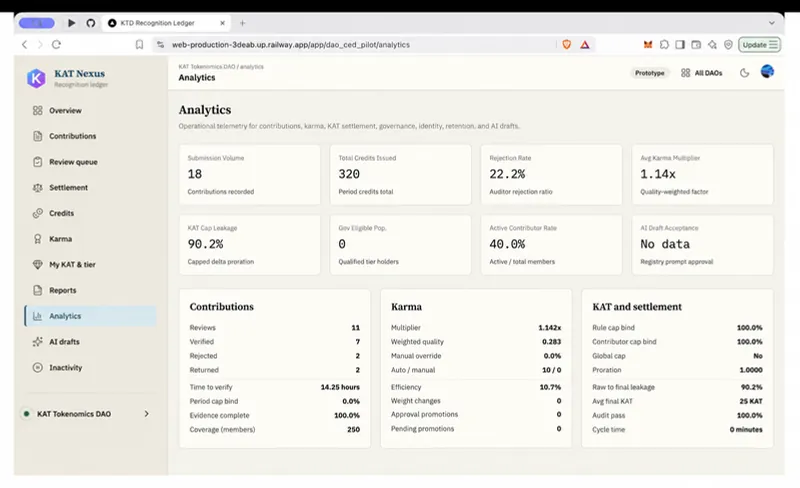
Translating the recognition framework into a technical prototype supporting DAO management, contribution verification, and Credit, Karma, and KAT processing.
The SP team organized development across frontend, backend, database, and AI/QA responsibilities. Its work covered authentication, role-based permissions, DAO and member structures, contribution services, economic calculations, and dashboard functionality.
Key contributions
- Established the frontend application and permission-based dashboard requirements.
- Developed backend API and service architecture.
- Defined database structures and migration requirements.
- Developed Credit, Karma, and KAT calculation and validation requirements.
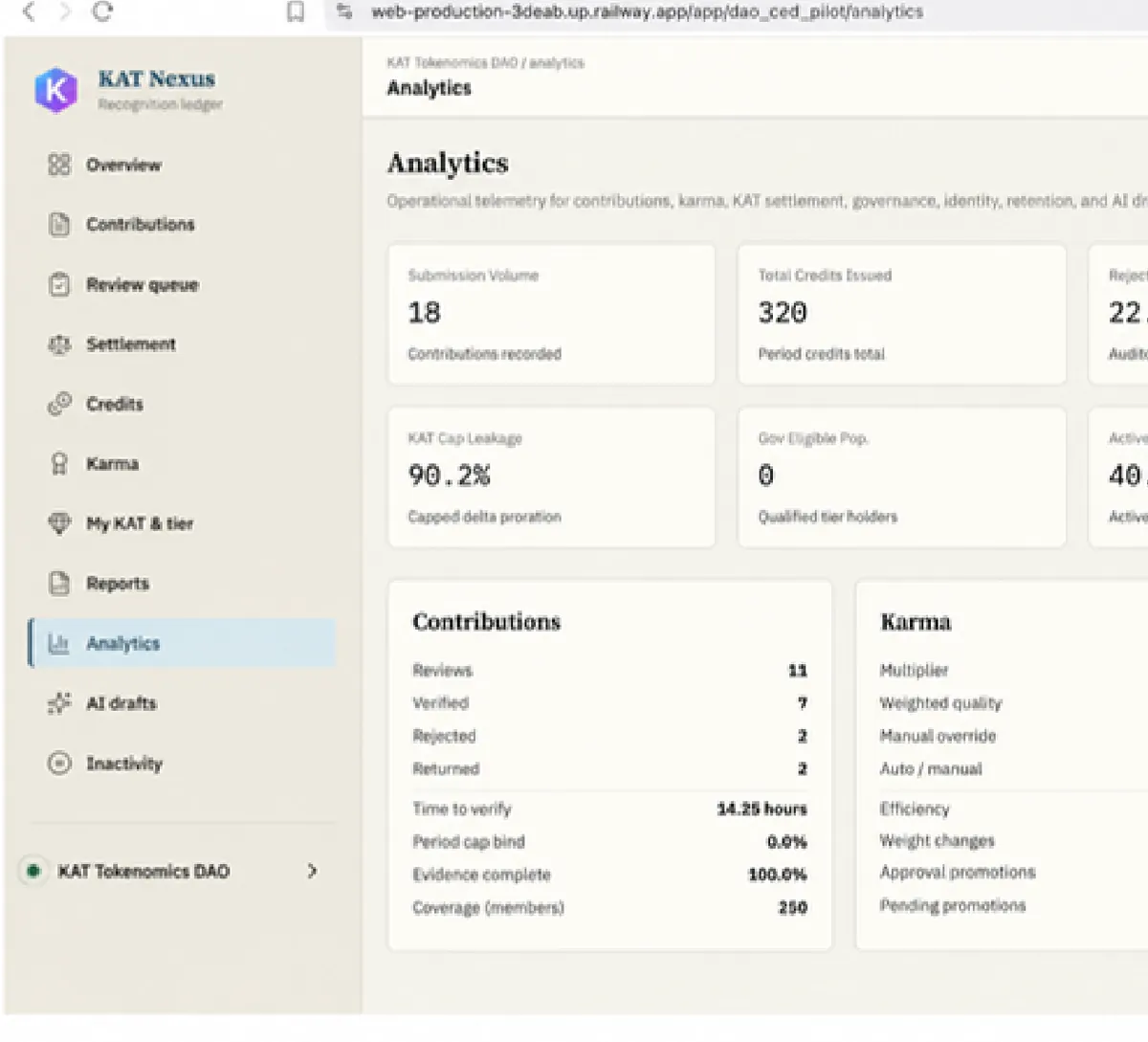
- Reported deployment of the KAT Nexus Dashboard frontend and backend.
- Recorded a prototype demonstration using KTD demo data.
The SP team's greatest challenge was an initial mismatch between the expected data architecture and the structure used during early development. Although the team understood the recognition framework, the complete implementation requirements were not sufficiently defined at the outset. This led to substantial rework during Milestone 1, affecting multiple technical workstreams and increasing coordination needs.
The experience demonstrated that a shared framework is not enough for implementation. Technical teams need an approved data model, clearly defined requirements, and early stakeholder validation. The reported deployment and demo marked an important technical milestone. However, production readiness, complete end-to-end validation, and deployment for all pilot DAOs should be assessed separately.
Lane 3: Documentation & Learning (DL)
Adekunle Adedotun Gbemigun
Making framework knowledge, implementation guidance, pilot observations, and verification records accessible and reusable.
The DL team supported the operational side of KTD by preparing guidance materials and tracking issues encountered during framework application. Following restructuring, DL operated as an Owned Lane within FSA.
Key contributions
- Prepared the DAO Operating Toolkit and Organizer Guide.
- Supported Quick-Start and onboarding documentation.
- Developed the Pilot Learning & Issue Log.
- Prepared the Evidence & Deliverable Index.
- Supported worked pilot samples and framework guardrail checks.
Documentation became especially important as KTD's framework and prototype evolved simultaneously. Clear operating instructions helped connect technical requirements with the practical responsibilities of DAO organizers and contributors.
However, the learning log and evidence index remained partially delivered in the October 15 report.
Future cycles should integrate documentation and evidence collection into ongoing development rather than leaving them to final reporting.
Reflection from Members
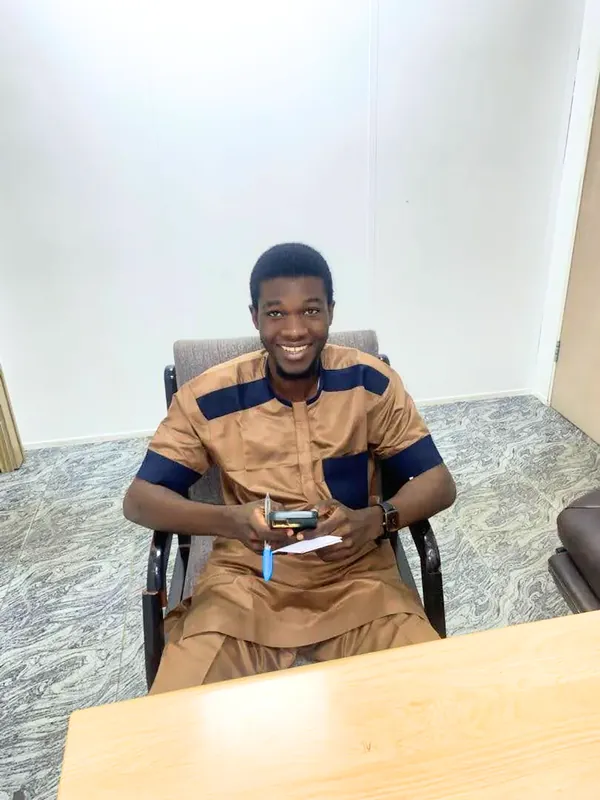
Adekunle Adedotun Gbemigun
“My KTD journey has been a masterclass in cross-DAO operational excellence and clear communication. Leading the FSA & DL working group deliverables from standardizing stateful Karma guardrails to establishing the 4-step period audit workflow taught me that true excellence isn't just about building robust frameworks, but ensuring every process is transparent, traceable, and easy for every DAO contributor to navigate. Overcoming cross-DAO alignment hurdles underscored how vital proactive, clear communication is in keeping decentralized teams aligned, accountable, and audit-ready.”
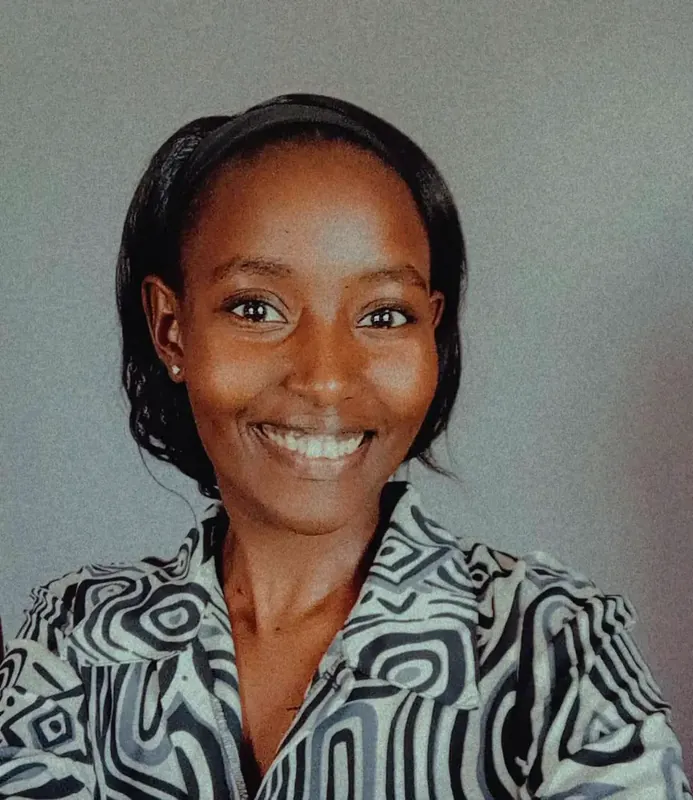
Clemence Ruhi
“My KTD journey has been a learning experience, especially when it came to understanding the project structure and aligning our work with the overall vision. One of the biggest challenges was realizing that I had made assumptions about the requirements, which meant we had to revisit and realign some of our work. This taught me the importance of clear communication, teamwork and ensuring that every task has a clear owner and expected outcome. I’ve learned that successful collaboration goes beyond completing individual tasks; it requires everyone to understand how their work connects to the bigger picture.”
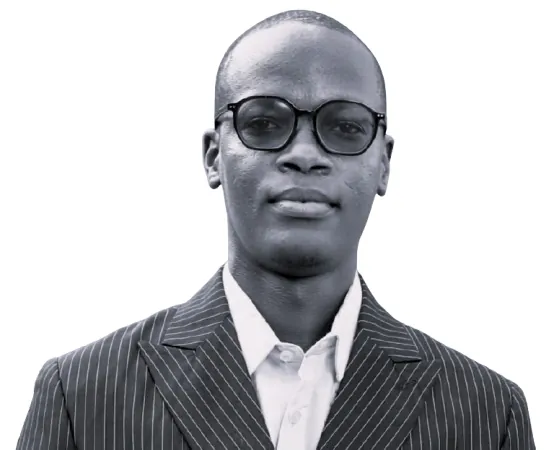
Andrew Anyona Mogambi
“Serving as the KTD Lead and guiding the Framework Support & Audit (FSA) Working Group during DEP2 has been a deeply transformative journey in structural agility and decentralized governance. A defining challenge—and ultimate learning moment came mid cycle during the August 2026 restructuring, when we absorbed the Documentation & Learning lane into FSA to clear operational bottlenecks and establish an "owned lanes" model. Collaborating across pilot DAOs like the Cultural & Creative DAO (CCD) made the experience remarkably rewarding, as we saw how community-driven creative workflows could align with Framework 1.0 logic. At the same time, managing operational inconsistencies and unexpected shifts across different DAOs highlighted the realities of decentralized execution. Ultimately, learning to navigate those unforeseen changes while maintaining clear individual accountability and transparent structures proved that adaptability is what truly makes decentralized systems resilient.”
Pesa Play DAO

How can we help children build financial confidence through interactive learning?
The Story Behind the Experiment
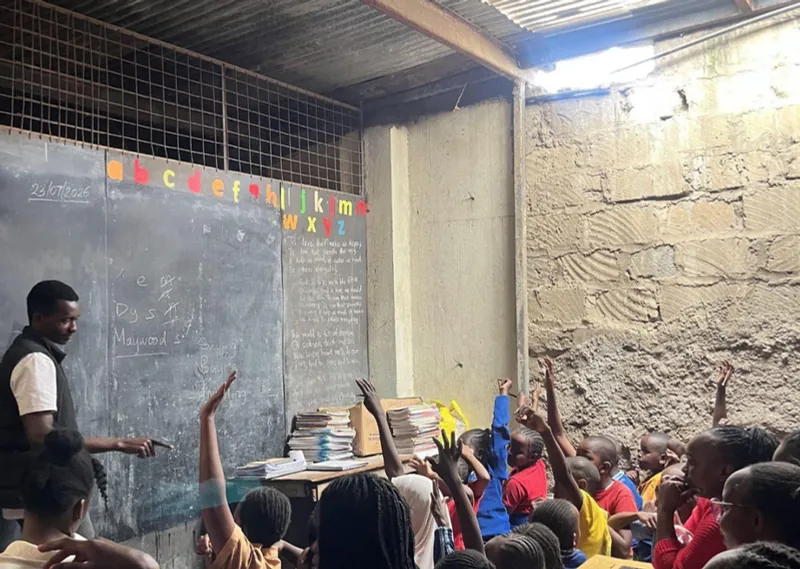
“How can we help children build financial confidence through interactive learning?”
This question inspired Pesa Play DAO to develop Hela Kids, an interactive financial literacy platform designed for children aged 8–15 in Nairobi, Kenya.
Through engaging learning experiences, the DAO aimed to equip children with practical financial decision-making skills while exploring sustainable revenue models through school licensing and family access.
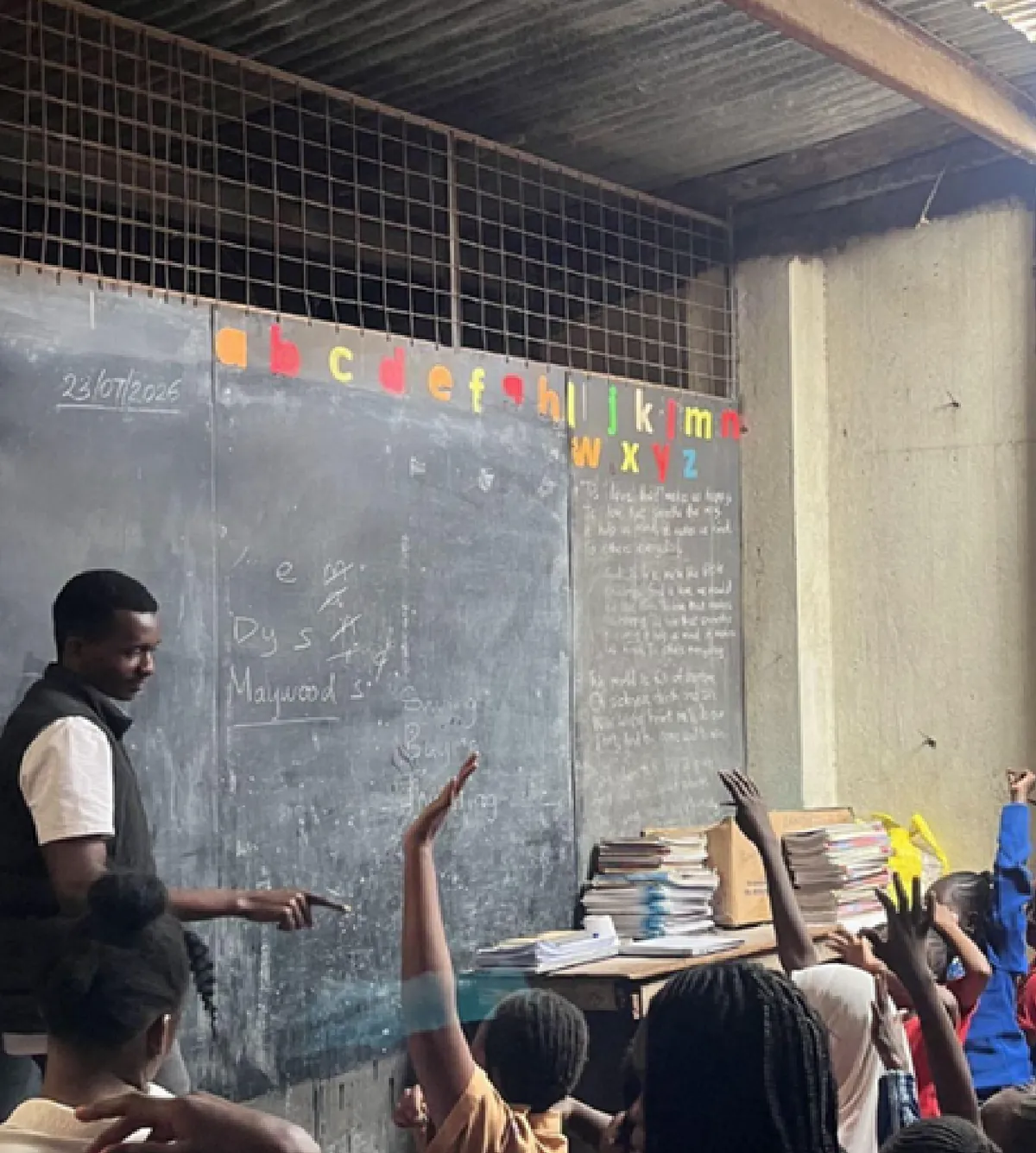
On July 24, 2026, Pesa Play DAO brought Hela Kids into a Nairobi primary school, turning its vision into a real-world learning experience.
The Pilot at a Glance
37 Children participated in the first pilot
3.58/4 Average rating for learning something new
3 Teachers reported children referring to Hela Kids concepts outside the session
Behind the Scenes: Reflections from Four Lanes
Lane 1: Coordination
Nana Wassila Hamza Maazou & Sorie Alpha Tholley
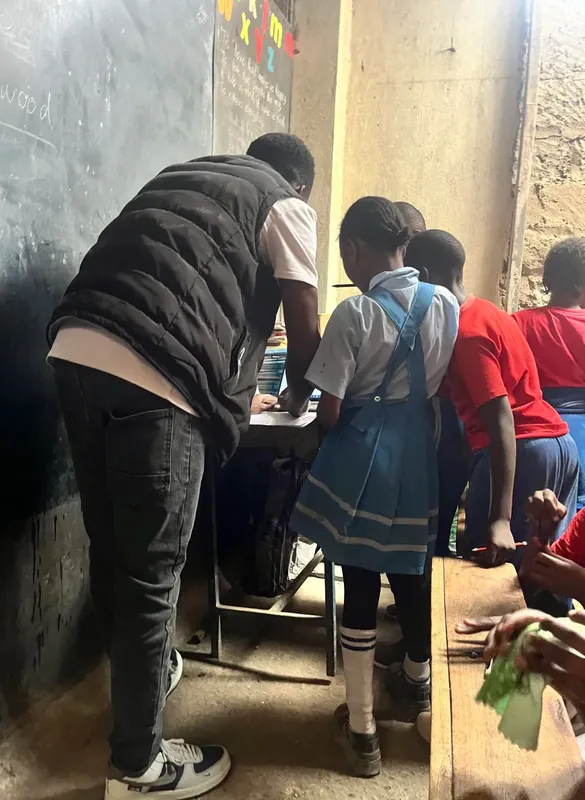
Throughout DEP 2, Lane 1 — Coordination played an essential supporting role in keeping Pesa Play DAO connected and aligned.
The team facilitated communication across working groups, followed up with lane leads, consolidated weekly progress reports, and monitored pending tasks and dependencies.
One of its key contributions was developing a more structured reporting process, including coordination summaries and the DAO Consolidated Weekly Working Group Report. As the program progressed toward close-out, Lane 1 focused on ensuring that achievements, outstanding deliverables, and next steps were clearly documented and communicated.
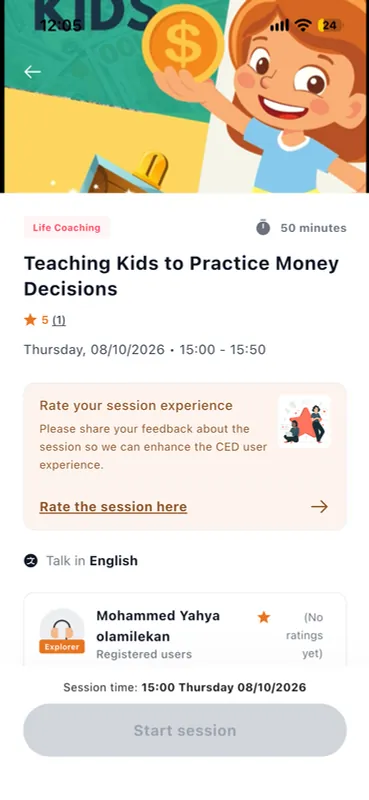
Coordinating a decentralized team across different schedules and time zones was not without challenges.
Delayed or incomplete updates from working groups sometimes made it difficult to maintain an accurate overview of progress.
To address these challenges, Lane 1 maintained regular follow-ups, reviewed available documentation, tracked pending actions, and worked closely with the DAO Lead to clarify missing information.
During the close-out phase, the team also prioritized reporting accuracy, ensuring that confirmed achievements were distinguished from pending or unverified information.
Another learning experience came from CED engagement, where a scheduled session remained incomplete because the registered Explorer did not attend, highlighting the importance of active participant engagement beyond initial registration.
Key Learnings
Communication creates alignment
Regular updates and follow-ups help teams stay informed about priorities and dependencies.
Clear ownership strengthens accountability
Defined reporting responsibilities and timelines make collaboration more effective.
Transparency builds trust
Distinguishing completed work from pending tasks ensures accurate collective reporting.
Engagement requires follow-through
Scheduling activities is only the beginning; participation requires continued outreach.
Documentation should be continuous
Maintaining organized records throughout implementation makes close-out more efficient.
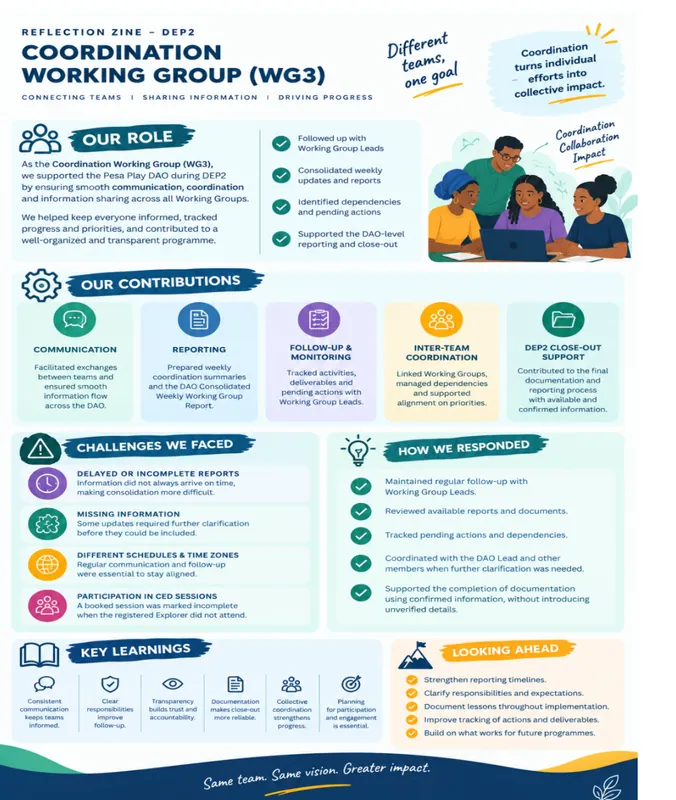
The experience of Lane 1 demonstrated that effective coordination goes beyond collecting progress updates. It requires connecting people, information, and activities to support collective accountability.
For future DAO initiatives, the team emphasized clearer reporting expectations, consistent documentation, structured responsibility tracking, and earlier identification of challenges.
Their journey reinforces one important lesson: Strong decentralized collaboration depends not only on individual contributions, but also on how effectively those contributions are connected toward a shared goal.
Lane 2: Execution & Product
Bismark Cheruiyot & Mohamed Abridan
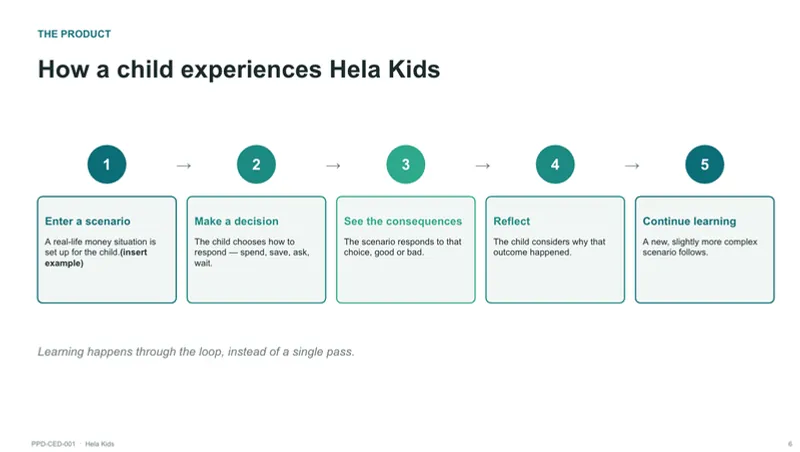
Lane 2 brought Hela Kids to life through two interactive learning modules, successfully delivered during the first school pilot.
Key Learning: Building a functional product is only one part of execution. Long-term usability depends on ongoing technical maintenance, quality assurance, and operational readiness.
Lane 3: Regeneration & Sales
João Emerson Lobo, Oscar Chaves Marques
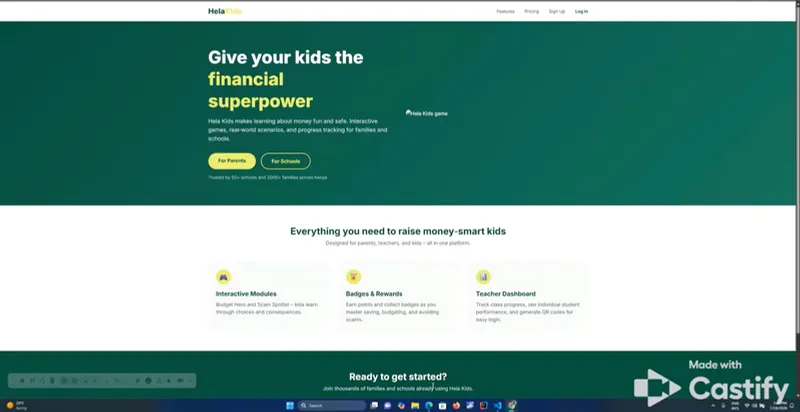
Lane 3 developed the foundation for future revenue generation, including school licensing materials, a product pitch deck, a partnership tracker, and plans for family access.
Key Learning: Sustainability requires more than a promising business model. It takes consistent outreach, clear accountability, and the ability to turn preparation into measurable action.
Lane 4: Documentation & Impact
Gintarė Jatautytė, Narmin Mammadli
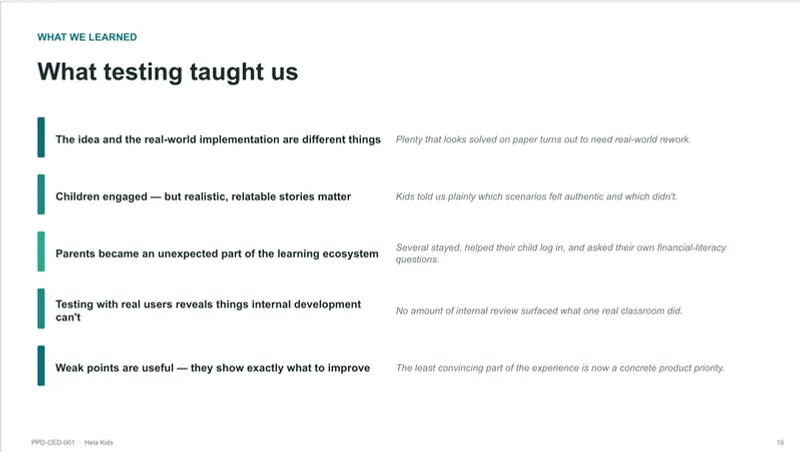
Lane 4 documented the pilot findings, analyzed learning outcomes, identified assessment limitations, and developed a revised assessment instrument for future use.
Key Learning: Honest documentation is essential to meaningful impact. Understanding why an evaluation falls short can be just as valuable as demonstrating positive results.
DEP 3 is under way with the Circles DAO — read the DEP 3 Docs.
Download as PDF, one file per part:
Overview (23.2 MB) Cultural & Creative DAO (13.2 MB) KAT Tokenomics DAO (7.3 MB) Pesa Play DAO (8.1 MB)