
Kambria DAOs
SyncGT Contract
Overview & Purpose
The SyncGT Contract is a governance-support smart contract used in Kambria DAOs to synchronize Governance Tokens (GT) with a DAO member’s economic stake and active participation.
Its purpose is to ensure that:
Governance power reflects actual contribution and ownership**
GT distribution remains aligned with DAO rules over time
Changes in LP ownership or participation are reflected transparently on-chain
Rather than assigning GT statically, the SyncGT contract enables periodic, rule-based updates to governance representation.
Governance Context
Within the Kambria DAOs governance model:
GT (Governance Token) represents voting power
LP tokens represent economic contribution
Credits represent active participation in DAO activities
The SyncGT contract connects these layers by updating GT balances based on predefined governance rules, approved at the DAO level.
What the SyncGT Contract Does (Conceptual)
At a high level, the SyncGT contract:
Calculates how many GTs a wallet should hold according to DAO rules
Mints or burns GTs to bring actual balances in sync
Executes updates only when permitted by DAO governance**
The contract itself does not decide governance rules. It only enforces rules that have already been defined and approved by the DAO.
Governance Model Reflected in SyncGT
A typical Kambria DAO governance model includes:
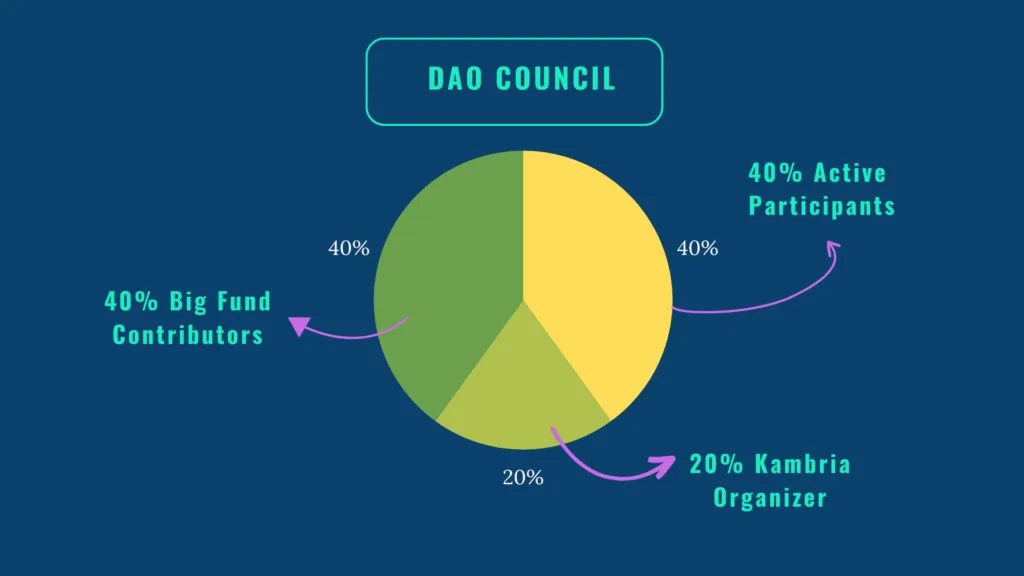
Total GT supply cap: 1,000 GTs per DAO (not all minted at DAO creation)
GT allocation categories (example model):**
40% for large LP contributors (e.g. investors holding ≥ 5% LP)
40% for active DAO participants (based on Credits accumulated through DAO activities)
20% reserved for DAO Organizer / Architect role (early-stage support)
Quorum requirement: Governance actions require a defined percentage of GTs minted at that time (e.g. 70%)
The SyncGT contract ensures GT balances remain consistent with these rules as LP ownership or participation changes.
High-Level SyncGT Flow (DAO Perspective)
From a DAO governance perspective, the SyncGT process follows these steps:
DAO defines GT distribution rules (LP-based, Credit-based, etc.)
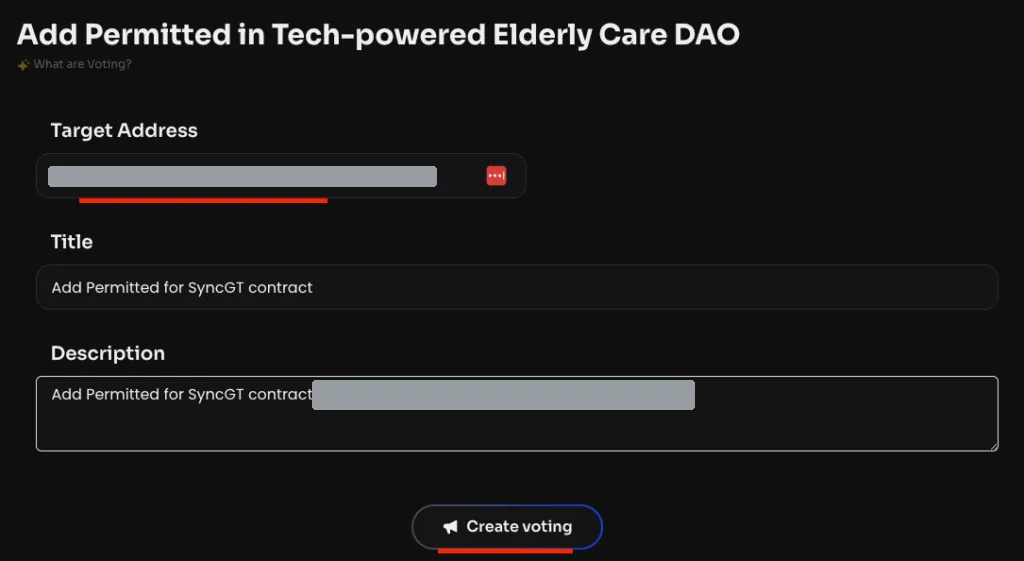
DAO approves the SyncGT contract as a permitted module
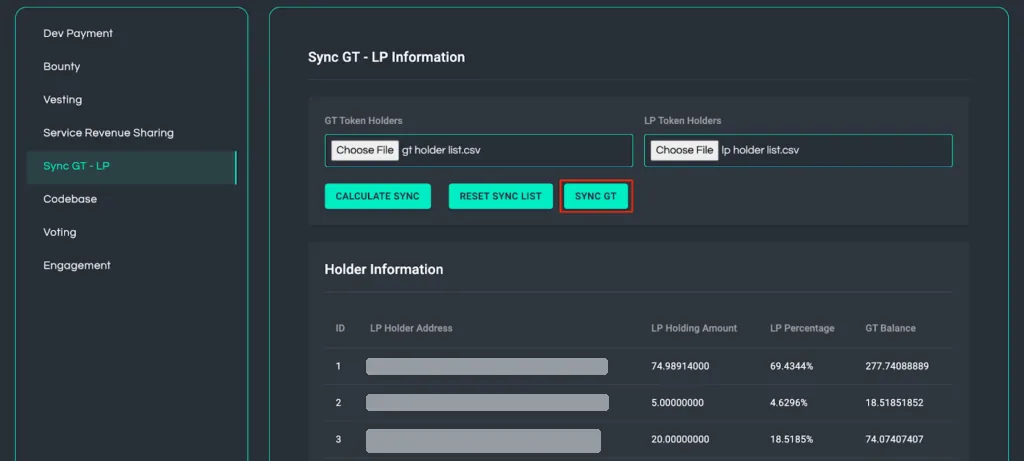
DAO Organizer prepares updated GT allocation data
SyncGT contract mints or burns GTs accordingly
Updated GT balances take effect in DAO governance
Roles in the SyncGT Process
DAO Organizer
The DAO Organizer is responsible for initiating synchronization based on DAO-approved rules.
Key responsibilities include:
Preparing GT allocation data (based on LP ownership or Credits)
Triggering the SyncGT process through the DAO interface
Ensuring synchronization aligns with DAO governance decisions
The DAO Organizer does not arbitrarily assign GTs; all changes follow predefined DAO rules.
DAO Council & DAO Members
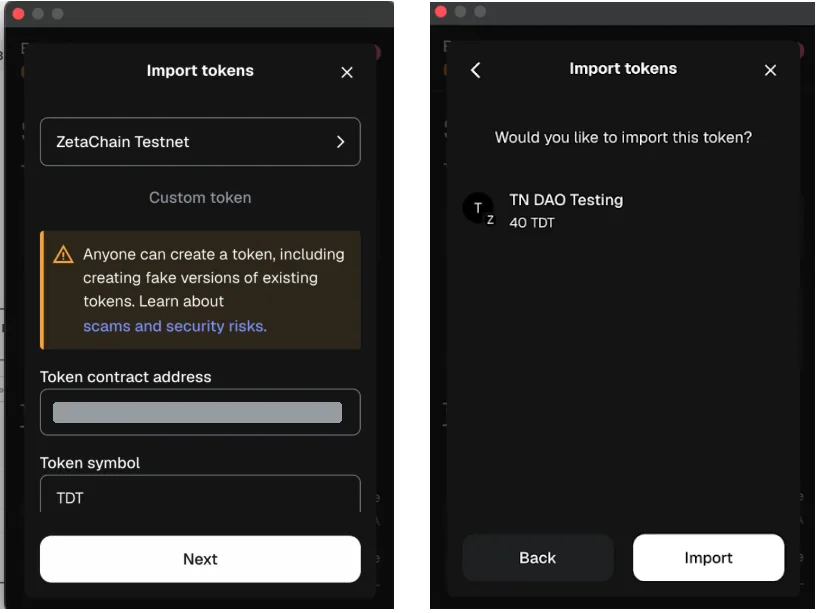
DAO Council members use GTs to vote on proposals
DAO members gain or lose GTs as their LP ownership or participation changes
DAO members:
Do not trigger sync operations
Do not manually adjust GT balances
Can verify GT balances and voting power on-chain
Synchronization Dimensions
The SyncGT contract typically supports synchronization based on:
LP Ownership
GT allocation proportional to LP held
Thresholds may apply (e.g. minimum LP percentage)
GT balances updated when LP ownership changes significantly
Participation (Credits)
GT allocation for active DAO participants
Based on Credits accumulated through DAO activities
Often updated periodically (e.g. annually)
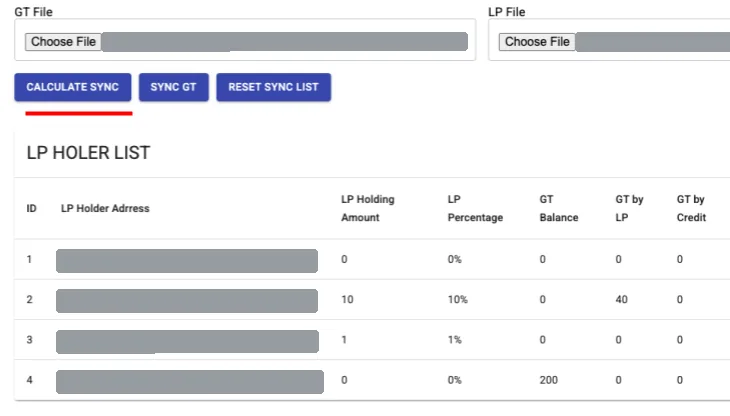
Transparency and Verification
All SyncGT operations are:
Executed on-chain
Publicly verifiable via blockchain explorers
Logged through standard smart contract events
The SyncGT contract itself does not obscure or aggregate data—anyone can independently verify GT changes.
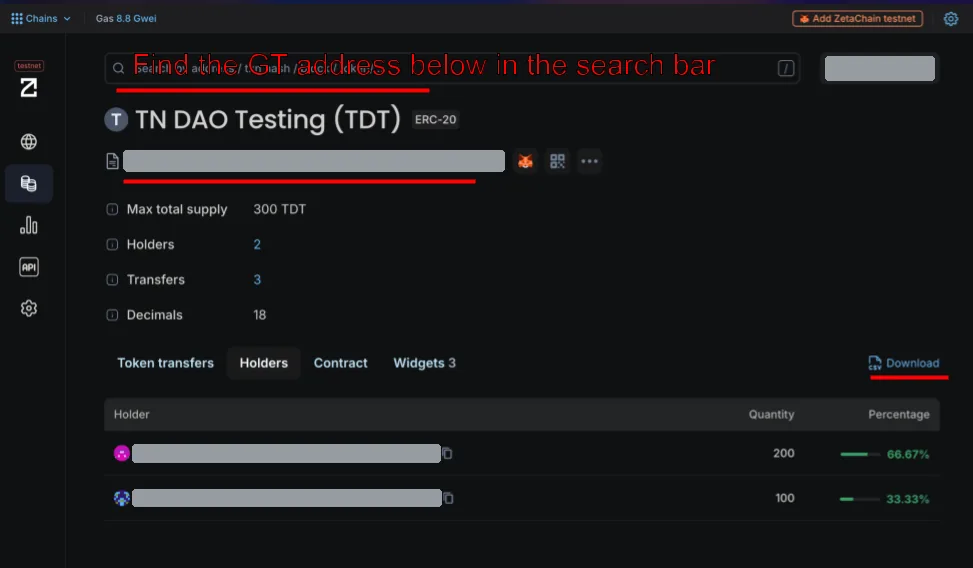
Relationship to Kambria DAOs Framework
The SyncGT contract is part of the Smart Contracts & Workflows layer of the Kambria DAOs Framework.
It supports:
Dynamic, fair DAO governance
Long-term alignment between ownership and participation
Scalable governance without manual recalculation
Integration with XDAO-based voting mechanisms
Important Notes
SyncGT updates governance power, not economic ownership
GT does not represent financial returns
Sync operations follow DAO-approved rules only
Frequency and criteria of sync depend on each DAO
Summary
The SyncGT Contract ensures that DAO governance power remains accurate, fair, and aligned with real contribution and ownership.
By separating:
Rule definition (DAO governance),
Execution (SyncGT contract),
Verification (on-chain transparency),
Kambria DAOs can scale governance responsibly without central control.